We use cookies to understand how visitors use our site and to improve your experience.
Meet the weaver
15+
Years restoring woven seats
We started with one broken chair and a bundle of dried bulrush, and we have kept at it ever since because honest work deserves honest materials
Seat restorations
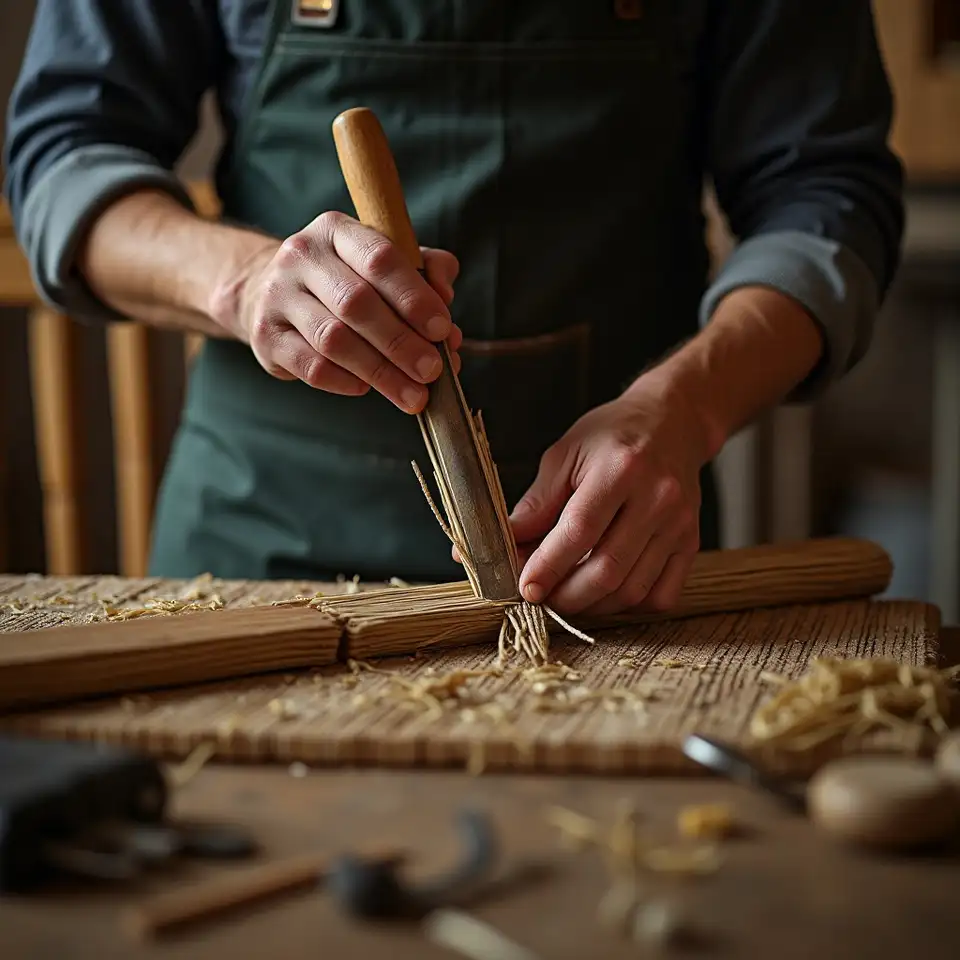
What we believe about every chair we touch
- Respect the original joinery
- Use what the land provides
- Bulrush and cattail grow in wetlands across Australia. We source dried leaves from local harvesters who cut responsibly. The material is light, strong, and smells like summer hay. Nothing synthetic comes near the seat.
- A single pair of hands works each chair from first strand to final knot. You will not find assembly lines here. That continuity matters because the weaver feels when the tension shifts and adjusts before the pattern sets wrong.
- Teach only by example
A chair that has stood for eighty years knows something about balance. We never force new material against old wood. We match the tension of the weave to the frame so the seat holds without stressing the legs or stretchers.
One piece, one weaver
We do not run classes or sell instruction kits. If you want to learn, we will talk while we work. The craft spreads when people see a finished seat and ask how it was done. That has always been enough.
2009
First broken seat
A neighbor brought over a kitchen chair with the rush rotted through. We had no idea what we were doing, but we had time and a shed full of tools. Three days later the chair held weight again. That was the beginning.
2012
Learning from the old timers
We spent two seasons visiting retired weavers in rural Victoria and New South Wales. They showed us how to twist a corner without splitting the leaf, how to wet the strand just enough, and how to read the grain of the frame before starting.
2015
Workshop opens
The shed became too small. We built a proper workshop with good north light, a sturdy bench, and racks for drying material. Word spread locally, and chairs started arriving from Melbourne, Ballarat, and Bendigo.
2019
Expanding techniques
We added herringbone and checkerboard patterns to the standard plain weave. Each pattern demands a different tension and a different approach to the frame. The chairs got more interesting, and so did the work.
2024
Community recognition
Local historical societies began sending us heritage pieces from homesteads and museums. We restored seats for a courthouse bench and a church pew. The craft stopped being a hobby and became a responsibility.
What guides our hands
These are not slogans. They are the rules we check against when a job gets difficult.
1
Quality first
A seat that looks good but creaks under weight is a failed seat. We test every finished piece before it leaves the workshop.
2
Sustainable sourcing
We know the names of the people who harvest our bulrush. The supply chain is short, transparent, and seasonal.
3
Clear communication
We tell you what the chair needs, how long it will take, and what it will cost before we touch a single strand.
4
Preservation
Every chair carries the marks of the person who built it and the people who sat in it. We do not erase that history.
5
Fair repair
We charge for the hours and the material. No hidden fees, no inflated stories about rarity. A fair price for fair work.
We are a small workshop dedicated to the old craft of rush seat weaving. Every chair that comes through our door is measured, stripped, and rewoven by hand using natural bulrush or cattail leaves. We do not rush the work, and we do not cut corners. If you have a chair with a worn or broken seat, we will rebuild it the way it was meant to be built.